

You’ve done the heavy lifting already. Your desk is full of notes, articles, and books you’ve spent months working through. Now comes the part that tests most researchers: shaping all of that material into a thesis that makes sense from start to finish and actually persuades the reader.
A really good thesis isn’t about fancy words or hitting a certain page count. It’s about giving people a clear path through your thinking and arguments that feel solid. That’s what separates the ones that get approved quickly from the ones that drag on for months.
The numbers back this up. Recent studies show that only around 62% of PhD candidates finish within six years, and the thesis is where a lot of them get stuck. But the students succeed fastest, all did the same two things: they nailed their structure early and made sure every argument actually pulled its weight.
Nailing Your Central Thesis Statement
This is the part that a lot of people rush, and it costs them later.
Your main thesis statement needs to make a real claim; something specific that another person could push back on. Not just “Social media influences elections.” That’s too vague. Try something sharper like “German data protection laws are struggling to keep up with social media platforms because they were written before algorithms started prioritizing emotional content over factual information.”
That kind of statement gives you direction. It tells you what evidence you need and why the topic actually matters.
I always point students toward the Purdue OWL guide on crafting thesis statements. It’s been my go-to recommendation for years because it forces you to test whether your idea is actually strong enough before you waste time writing around it. Check it out if you haven’t already.
Get this sentence right in the first two or three weeks. I’ve watched students have to rewrite half their thesis later because they started with a weak foundation. Save yourself that headache.
Mapping Out a Clear Thesis Structure
Once your central idea is locked in, you need a clear plan. Good structure isn’t just for examiners; it makes the writing process way less painful too.
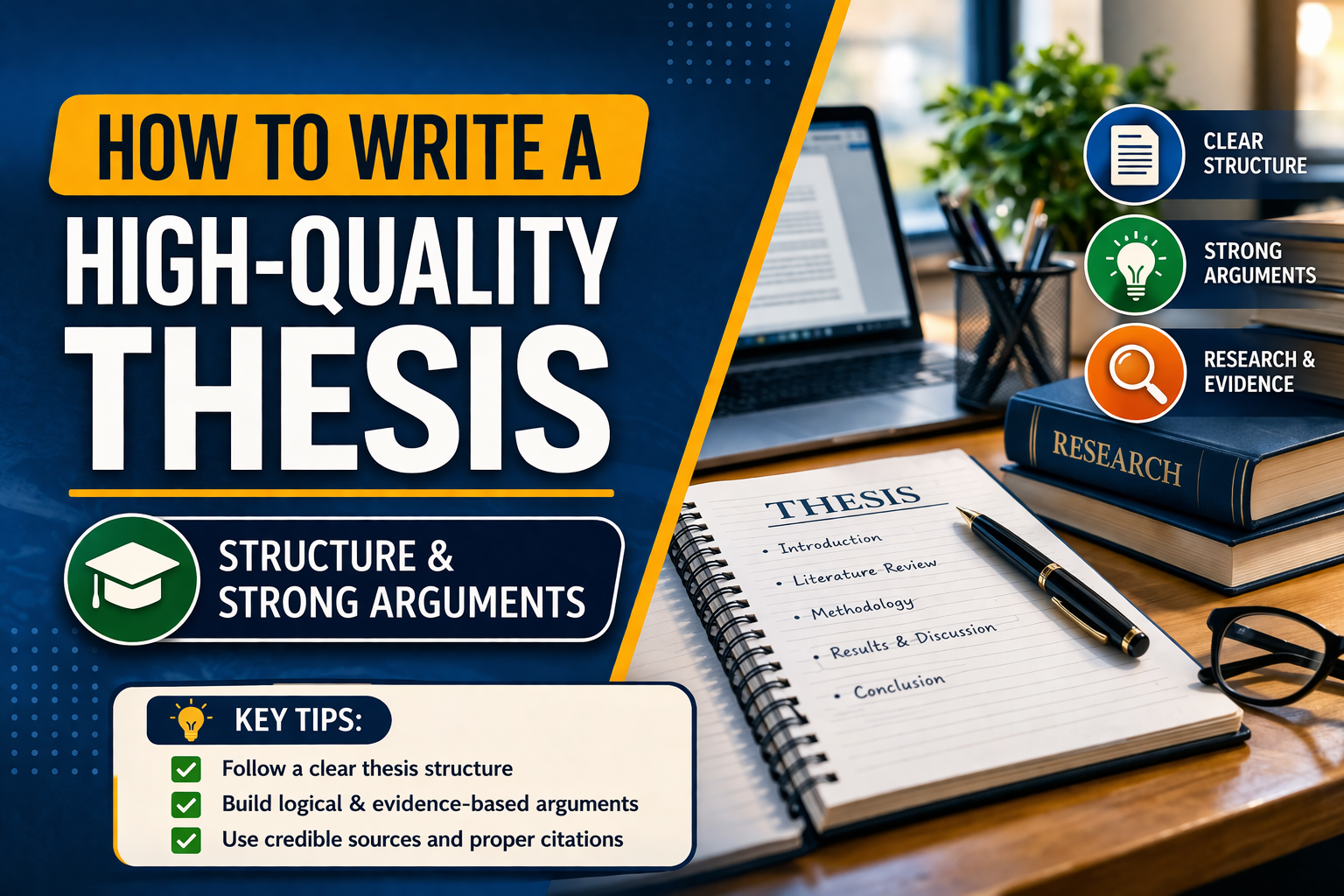
Start with an introduction that explains the problem, shows the gap in existing research, states your main claim, and gives a quick map of what’s coming. Keep it tight. Nobody wants to read five pages before you get to the point.
The literature review comes next. Don’t just list what other people have written. Point out where the conversation is missing something and how your work steps into that space.
Then walk through your methodology. Be upfront about how you gathered and analyzed your material. Mention what you couldn’t do and why. That honesty actually builds trust.
Now start by simply showing what you found. Keep the explanation straightforward and resist the urge to interpret every detail right away. The next chapter is where you step back and examine what those results mean, connecting them clearly to the research question you started with.
Your conclusion should then tie the whole project together. Revisit the main ideas, consider their wider significance, and suggest where further research might go from here.
Here’s a habit that’s saved many of my students: after finishing each section, ask yourself, “Does this actually support my main argument?” If the answer isn’t a clear yes, fix it or cut it. You’d be surprised how much stronger your work gets when you’re ruthless like that.
Special Considerations for Law Thesis
If you’re in law, things get even more precise. You’re expected to stay rooted in legal texts, judgments, and established doctrines. It’s a critical analysis all the way, not just describing what the law says.
Most successful law theses open with a focused legal problem and then dive into doctrinal analysis or comparison across jurisdictions. Your footnotes need to be airtight here.
A number of law students I’ve worked with found themselves overwhelmed trying to balance dense case law with persuasive writing. In those cases, targeted help from law thesis writing services made a real difference, especially when it came to organizing precedents and sharpening the overall argument without losing their personal perspective.
Making Arguments That Hold Up
Structure keeps things tidy, but arguments are what make examiners nod along instead of reaching for the red pen. Build each point on concrete proof; data, cases, studies, then explain the “why” behind it in plain terms.
Don’t just drop a quote or statistic and move on. Show exactly how it supports your claim. The strongest theses also tackle the other side. When you acknowledge opposing views and explain why yours still holds, your work gains real weight instead of looking one-sided. The trick most students miss? Synthesize instead of summarize.
The best part? Stop just repeating what sources say. Start showing how your findings move the conversation forward. That’s where your own thinking becomes visible.
When Extra Support Helps Most
Let’s be real for a moment. This process is exhausting. Some chapters write themselves while others refuse to cooperate, no matter how many coffees you drink.
That’s completely normal. Plenty of smart students eventually reach out to thesis writing services for a fresh pair of eyes on structure and argument flow. The right kind of support doesn’t take over your voice – it just helps you see your work more clearly so you can finish it properly.
Wrapping It Up
Writing a high-quality thesis really comes down to having a clear structure that carries the reader along and building arguments that feel convincing and well-supported.
Start strong with your main claim. Build around it logically. Back everything with clear thinking. Revise without mercy. And don’t feel bad about asking for help when you need it.
Do these things consistently, and you’ll end up with a thesis that doesn’t just get approved, it actually feels like yours.